A Nationwide Dictation on “Respect for the Mother Tongue” Was Held Among the Center’s Trainees
A Nationwide Dictation on “Respect for the Mother Tongue” Was Held Among the Center’s Trainees
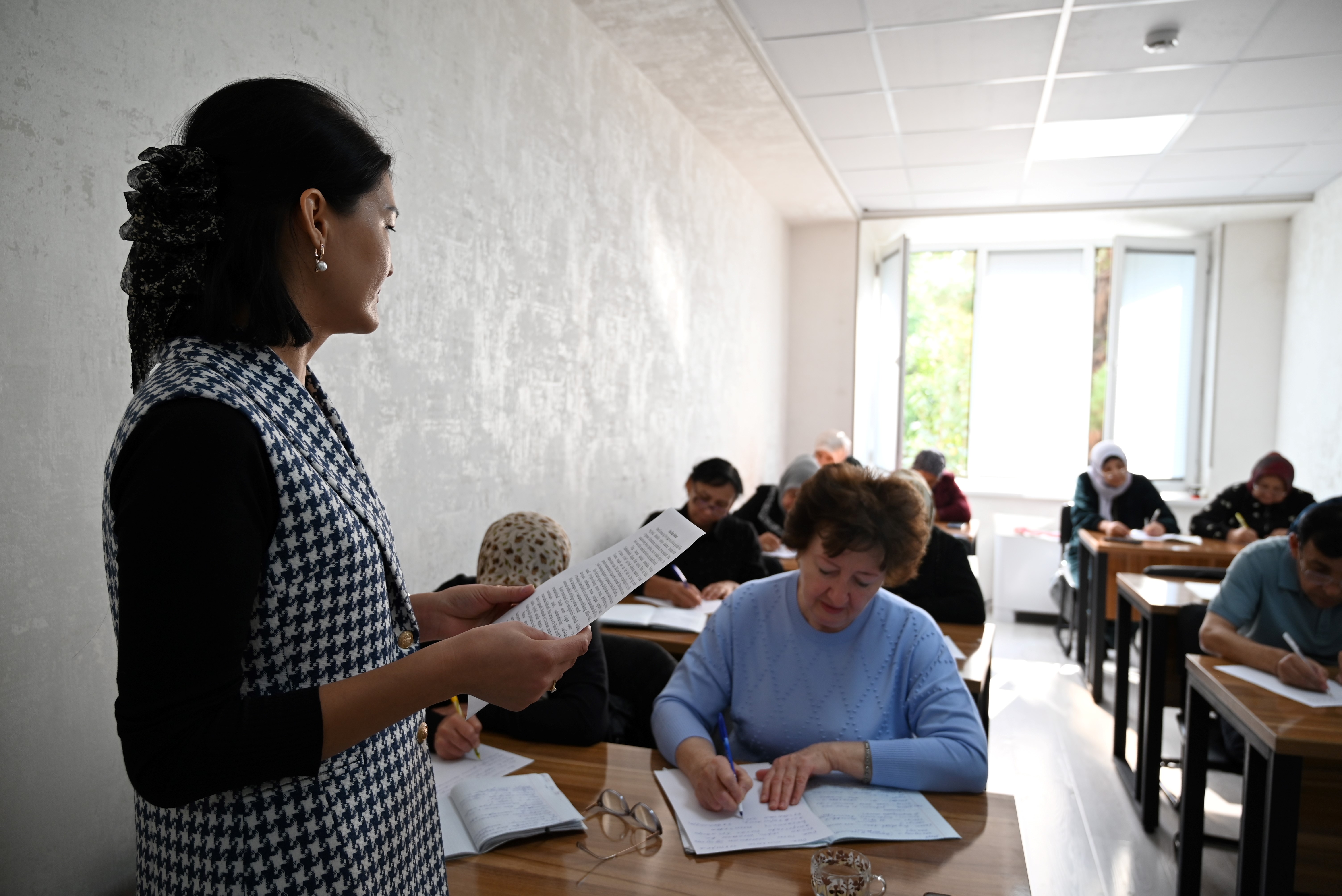
With the aim of further enhancing the prestige and status of the Uzbek language, strengthening respect and attention toward the mother tongue, and improving the culture of written literacy, a dictation event was organized at the Center for Retraining and Advanced Training of Personnel in the Field of Sanitary and Epidemiological Well-being and Public Health as part of the “Nationwide Dictation” project.
The project is being implemented on the basis of a joint resolution of the Republican Center for Spirituality and Enlightenment, the Youth Affairs Agency of the Republic of Uzbekistan, and the Writers’ Union of Uzbekistan. Its main objectives are to increase respect for and interest in the Uzbek language, strengthen the social status of the state language, and develop participants’ knowledge and skills in spelling, punctuation, and written communication.
As part of the project, a dictation on the topic “Respect for the Mother Tongue” was conducted among trainees studying in the areas of Bacteriology and Hygiene at the Center. The event was aimed at strengthening their skills in observing the norms of the Uzbek literary language and expressing ideas clearly and accurately in writing.
The dictation text highlighted the role of the mother tongue in human life, as well as its importance in preserving national values and maintaining spiritual continuity between generations. It was emphasized that preserving one’s mother tongue is an honorable duty of every person, and that respect for language begins with everyday communication, the appropriate use of words, and the clear expression of ideas.
It was also noted that literacy plays an important role in the professional activity of every specialist. In particular, in the fields of medicine and sanitary and epidemiological well-being, clearly, understandably, and responsibly written opinions and recommendations contribute to the effectiveness of professional work.
During the event, the trainees not only tested their knowledge of spelling and punctuation rules, but also once again deeply appreciated the richness and beauty of their mother tongue. Such spiritual and educational activities contribute to further strengthening respect for the state language and developing written literacy and speech culture among trainees.
Respect for the mother tongue means respect for national values, history, and future generations.